


Cala Pregonda beach
Cala Pregonda is one of Menorca’s iconic beaches, with a unique landscape dominated by varied geological colours and the islets that protect it from northern winds.
Cala Pregonda is an almost unspoilt beach, except for the three houses located right by the shore. The sand is coarse and golden, there are no services, and reaching the beach requires a 2 km walk. However, the walk is well worth it, as it is one of the most spectacular and original beaches in Menorca. That said, it is as beautiful and famous as it is popular, and in summer it becomes very crowded with swimmers and anchored boats, which can take away some of its charm.
The cove has three beaches: Pregonda, Pregondó (which you will reach before Pregonda when coming from Binimel·là) and the Escull de Pregonda beach, a small secluded beach located on the southern side of the largest islet protecting Pregonda. This little beach can only be reached by swimming or by small boat.
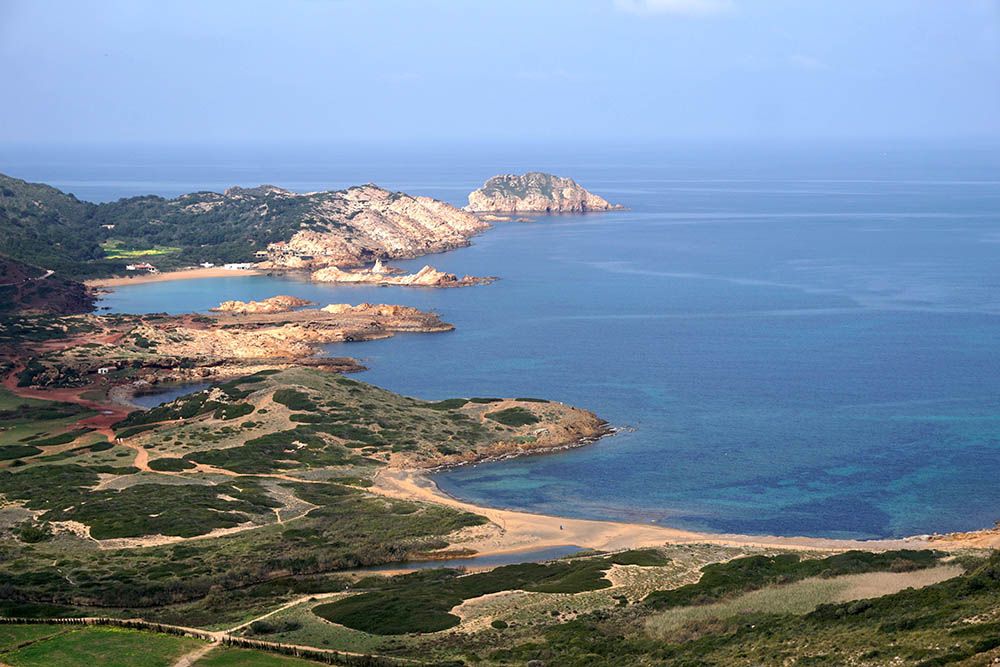
Cala Pregonda is an exceptional setting for enjoying a great beach day, with a well-developed dune system behind it and seabeds ideal for snorkelling. Thanks to its location within the protected area of the North Menorca Marine Reserve and the natural shelter provided by the nearby islets, Pregonda offers seabeds rich in marine life just a few metres below the surface.
It is important to check the weather at Cala Pregonda before visiting, as during tramuntana (north wind) conditions, even though it is protected by its islets, the swell may prevent you from enjoying a swim in its crystal-clear waters.
Cala Pregonda has remarkable geological value, dominated by clay formations, similar to those found at Cala Pilar or Cavalleria beach. Recently, clay mud baths using the surrounding clays have become very popular. Taking clay mud baths on beaches erodes the base of the cliffs, creating instability in their upper sections. This can lead to rockfalls, posing a risk to beach users. In addition, this activity causes vegetation loss and shoreline retreat, destroying a non-renewable resource, as clays are very ancient rocks. Try to make your visit to Menorca’s natural areas as unobtrusive as possible. Leave no trace!
There are no services or accommodation at Cala Pregonda.
How to get to Cala Pregonda
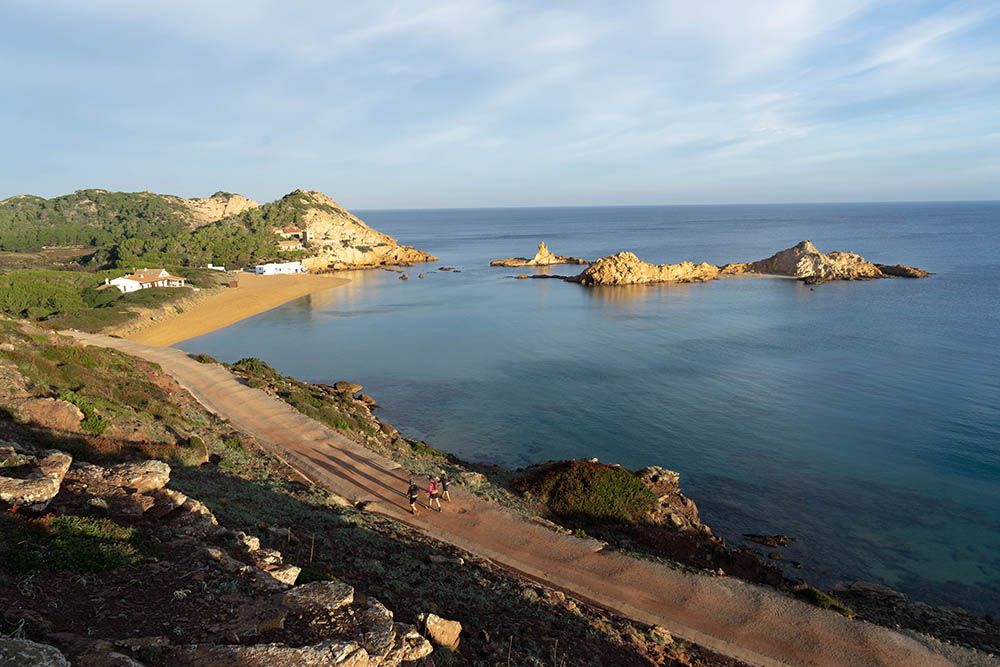
The best way to reach Cala Pregonda is on foot from Binimel·là beach, about 10 km from the town of Es Mercadal. At Binimel·là beach you will find a car park, and you must take the Camí de Cavalls heading west, to the left of the beach when facing the sea. You will need to walk 2 km without difficulty (approximately 30 minutes) through one of the most distinctive landscapes on Menorca’s north coast, first reaching Pregondó beach, and Pregonda a few metres further on. Many people stop at Pregondó beach, either out of laziness or confusion. This sometimes means that Cala Pregonda is a little less crowded. Take advantage of it — it’s worth it.
It is important to follow the access path and stay on the marked trail, avoiding erosion of the surrounding environment. Also avoid building small piles of stones as souvenirs of your visit to the island, as this harms flora and fauna and distorts the landscape.
There is no public transport to reach Cala Pregonda.
Cala Pregonda and Mike Oldfield
Did you know that Cala Pregonda was the setting for the cover of a Mike Oldfield album?
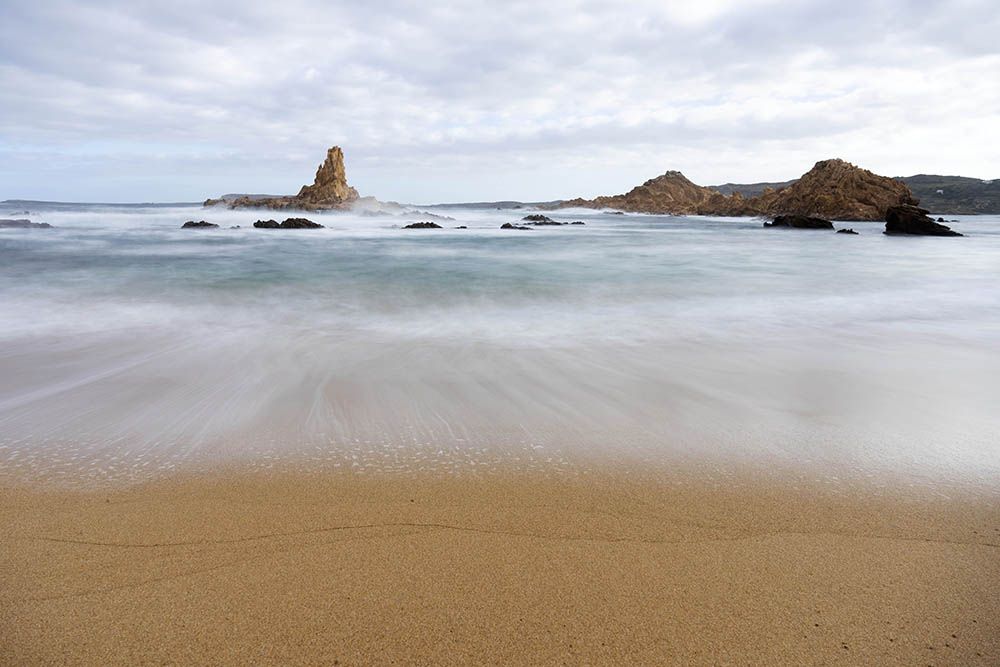
Pregonda was the place chosen by Mike Oldfield, the progressive rock and new age musician internationally known for his work Tubular Bells, for the cover photograph of his fourth album Incantations, released in 1978. The photograph, featuring the musician with the reefs of Pregonda in the background on a stormy day, was taken by photographer Trevor Key. In 2011, however, the album was reissued and Cala Pregonda became the undisputed star of the album cover. In this case, the cover was illustrated with an enigmatic nighttime image of the reefs of Pregonda, taken by the Menorcan photographer Sús Camps.

Nearby points of interest
• Camí de Cavalls: Cala Pregonda is located along Stage 6 of the Camí de Cavalls route between Binimel·là beach and Els Alocs, the longest and most demanding stage of the Camí de Cavalls, but also one of the most spectacular. You can find more details about this stage of the Camí de Cavalls in our guide: Binimel·là beach – Els Alocs. Camí de Cavalls. Stage 6.
Map of Cala Pregonda
See all the unspoilt beaches of Menorca.
We all know that Menorca’s main tourist attraction is its beaches, which is why no Menorca travel guide would be complete without a beach guide. Here you’ll find a complete guide to the best beaches in Menorca, with practical travel information
A selection of the 10 best unspoiled beaches in Menorca: Cala Mitjana, Cala Turqueta, Macarella, Pregonda, Cavalleria, Tortuga and four more. Discover them!
The beach at Son Bou with its fine white sands is the longest in Menorca (3 km). The sea here is shallow, its waters clear and clean
Binigaus is the largest unspoilt beach on the south coast of Menorca, with no services and within walking distance of the nearest car park. For this reason, it is also the most popular beach in the municipality of Es Migjorn Gran.
Cala Trebalúger is one of Menorca’s most beautiful unspoiled beaches. It is framed by limestone cliffs and shaded by pine trees that reach down to the shoreline. The beach is marked by the mouth of the Son Fideu ravine stream.
Cala Galdana, a place of outstanding natural beauty, is today one of the most important urbanised beaches in Menorca. It is a very popular tourist beach surrounded by a large resort area offering all kinds of services.
The Cala Mitjana and Cala Mitjaneta area is one of those places that leaves no one indifferent — an unspoiled beach surrounded by pine trees and turquoise waters that are simply irresistible for swimming.
Is Cala Macarella the most photographed and most visited beach in Menorca during the summer months? Probably yes — and for good reason. Cala Macarella is a postcard-perfect beach that everyone wants to see at least once.
Cala Turqueta is one of the most famous unspoilt beaches on the south coast of Menorca. It has everything many of us are looking for: fine white sand, surrounded by pine trees, and crystal-clear water that, as its name suggests… is turquoise.
The Son Saura del Sud beaches, in the municipality of Ciutadella de Menorca, are among the largest unspoilt beaches on the south coast, with the shade of a splendid pine forest behind them and easy access by car.
Cala Algaiarens, also known as the La Vall beaches, is a group of two unspoilt beaches on the north coast of Menorca, easily accessible, with no services and located within an area declared a Natural Area of Special Interest.
Cala Pilar is an unspoilt beach on the north coast of Menorca with no car access, located in an incomparable natural setting. The walk to reach this corner of the world is well worth it.
Cala Pregonda is one of Menorca’s iconic beaches, with a unique landscape dominated by varied geological colours and the islets that protect it from northern winds.
Binimel·là Beach is a coarse-sand beach with different colour tones, virtually unspoilt yet easily accessible by car, located in the heart of the North Menorca Marine Reserve.
Cavalleria beach is one of the largest beaches on the north coast of Menorca. Unspoilt, surrounded by rugged nature, with no services, easy car access and watched over by the Cavalleria Lighthouse. A must-see.
The Son Saura del Nord sandy beach is a large beach with fine white sand, urbanised, and home to one of the largest and most spectacular dune systems in Menorca.
Arenal d’en Castell is one of the largest and most spectacular beaches in Menorca, but also one of the most urbanised, very touristy and with all kinds of services right on the beach.
Cala Tortuga and Cala Presili are two neighbouring beaches on the east coast of Menorca, watched over by the Favàritx lighthouse, which you can admire while swimming in the crystal-clear waters of these two unspoilt coves in the S’Albufera des Grau Natural Park.
If you are visiting Menorca with young children, you should know that Es Grau beach is the family beach par excellence in Menorca. It is the largest beach in the S’Albufera des Grau Natural Park, is protected by Colom Island, and is located next to the summer resort village of Es Grau.
The beach is associated with the summer residential area of Sa Mesquida, where many families from Maó spend their summers. As it is very well preserved and relatively separated from the urbanised area, it is a practically unspoilt beach.
The beach of Punta Prima is the tourist beach par excellence of the municipality of Sant Lluís. It offers a significant range of hotels and is equipped with all the beach services you may need.
Thanks to the good conservation of the immediate surroundings of the Binibèquer beach, and despite being surrounded by the Binibèquer Nou residential area, it feels as if you were on an unspoilt beach, surrounded by pine trees, with crystal-clear waters and fine white sand.
The cala en Porter beach is located very close to one of the largest residential areas on the south coast of Menorca. Nestled between high cliffs that block the incoming swell, it is a natural pool ideal for families spending their holidays in Menorca with children.